
POS, payments, and equipment control
Klarity Car Wash
Custom software running a working car wash—from payment terminals to physical equipment
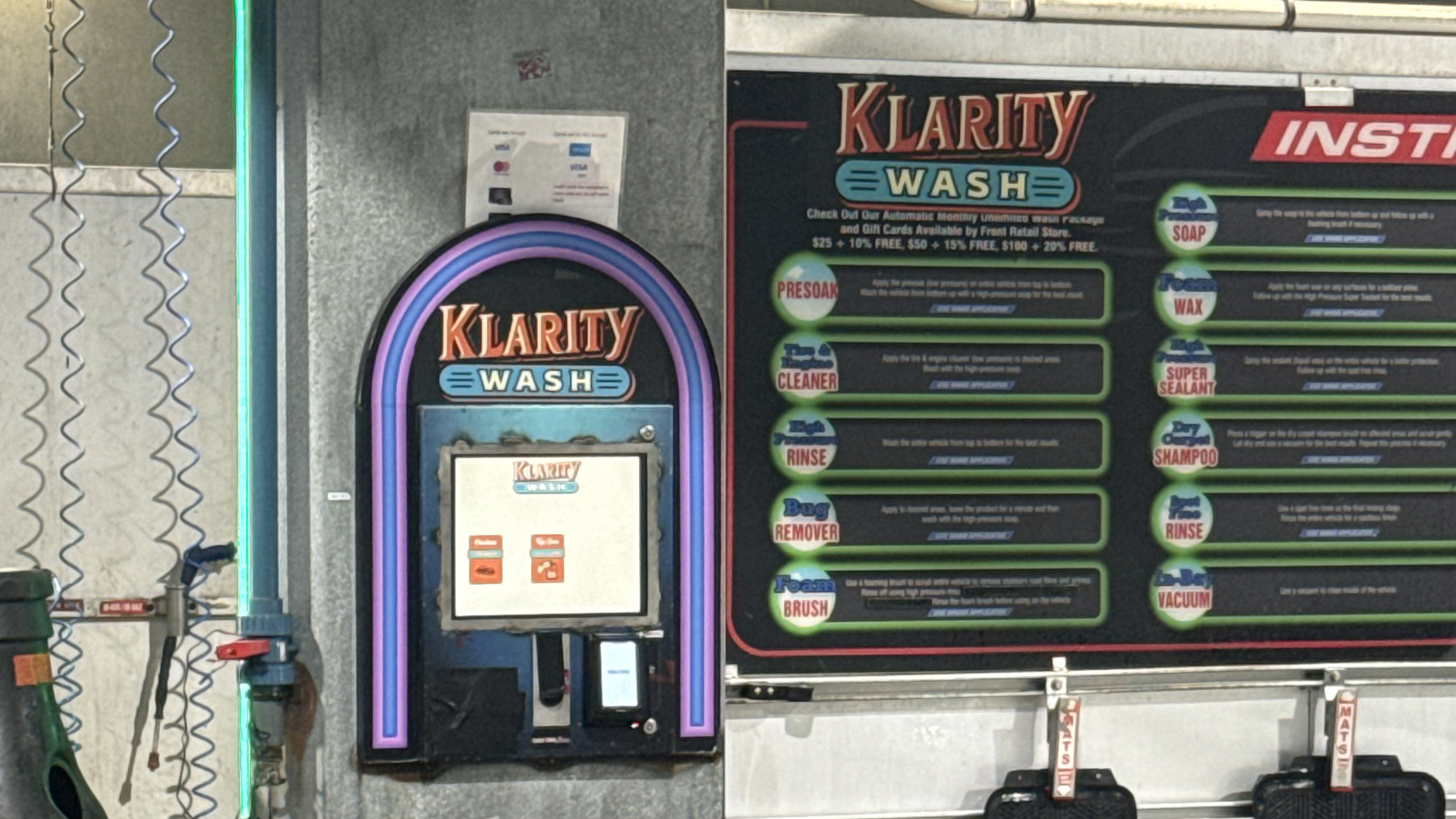
Klarity Car Wash uses Codebytes software to accept payments, coordinate customer accounts and operate its physical wash equipment. The replacement was built around the existing hardware when support for the previous system was ending.
Existing wash and payment hardware preserved
Kiosks, staff POS, app, payments, and bay controls coordinated
Invoicing, gift cards, promotions, receipts, and reporting synchronized
Start by proving the hardware connection
Before commissioning the full platform, Klarity offered a paid test: operate one part of the existing car-wash hardware. Codebytes demonstrated it working within a week, and the business then awarded the larger project.
That first step answered a concrete question about the equipment before the full replacement began. The scope and timing were specific to this project; another installation would need its own assessment.
Why This Project Matters
This was not simply a web application or a new point-of-sale screen. The software had to run a physical business: accepting payments, recognizing customers, coordinating staff workflows, activating wash equipment, and keeping every transaction auditable.
For an operational business, replacing software can also threaten the equipment and processes built around it. This project shows how custom software can extend the life of working infrastructure, remove dependency on a discontinued vendor, and modernize the business without forcing an unnecessary rebuild.
The Problem
The existing POS and wash-control vendor was discontinuing support. Without a replacement, the business risked losing payment processing, customer accounts, and software control over its automated and self-serve wash bays.
Alternative systems required major hardware replacement. That would have turned a software problem into a costly infrastructure project and disrupted equipment that was still doing its job.
Klarity needed a replacement platform that could assume control of the operation without discarding the machinery, payment hardware, and site infrastructure already in place.
Launching before the previous service ended
The previous provider brought its shutdown forward by four months and gave Klarity only one month’s notice. Codebytes worked with the client to identify the features essential for launch and prioritize the remaining critical work.
The replacement was tested live, introduced in a few bays, then rolled out across the facility for the official launch. It was running before the old service ended, with no interruption to operations.
The Solution
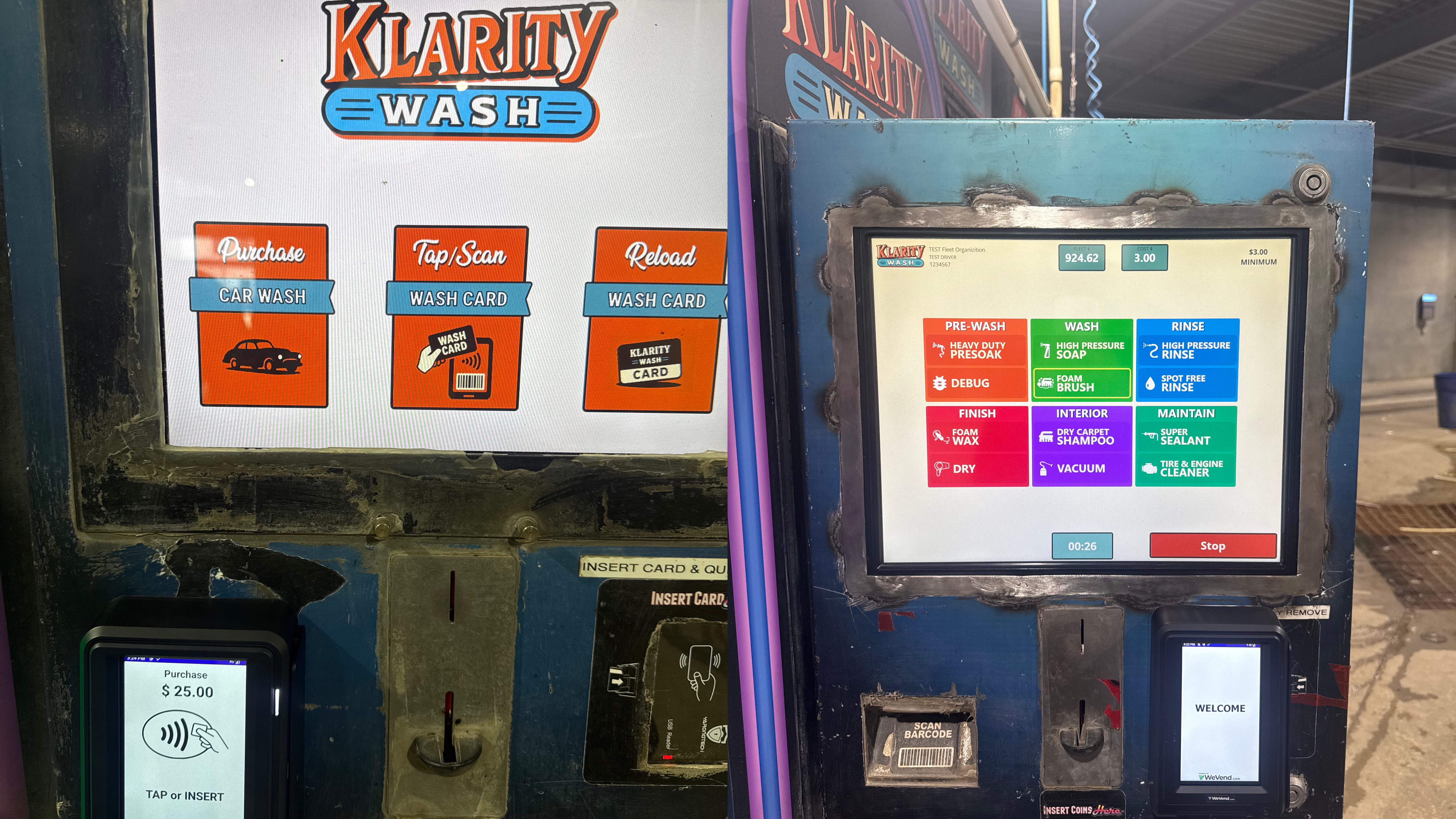
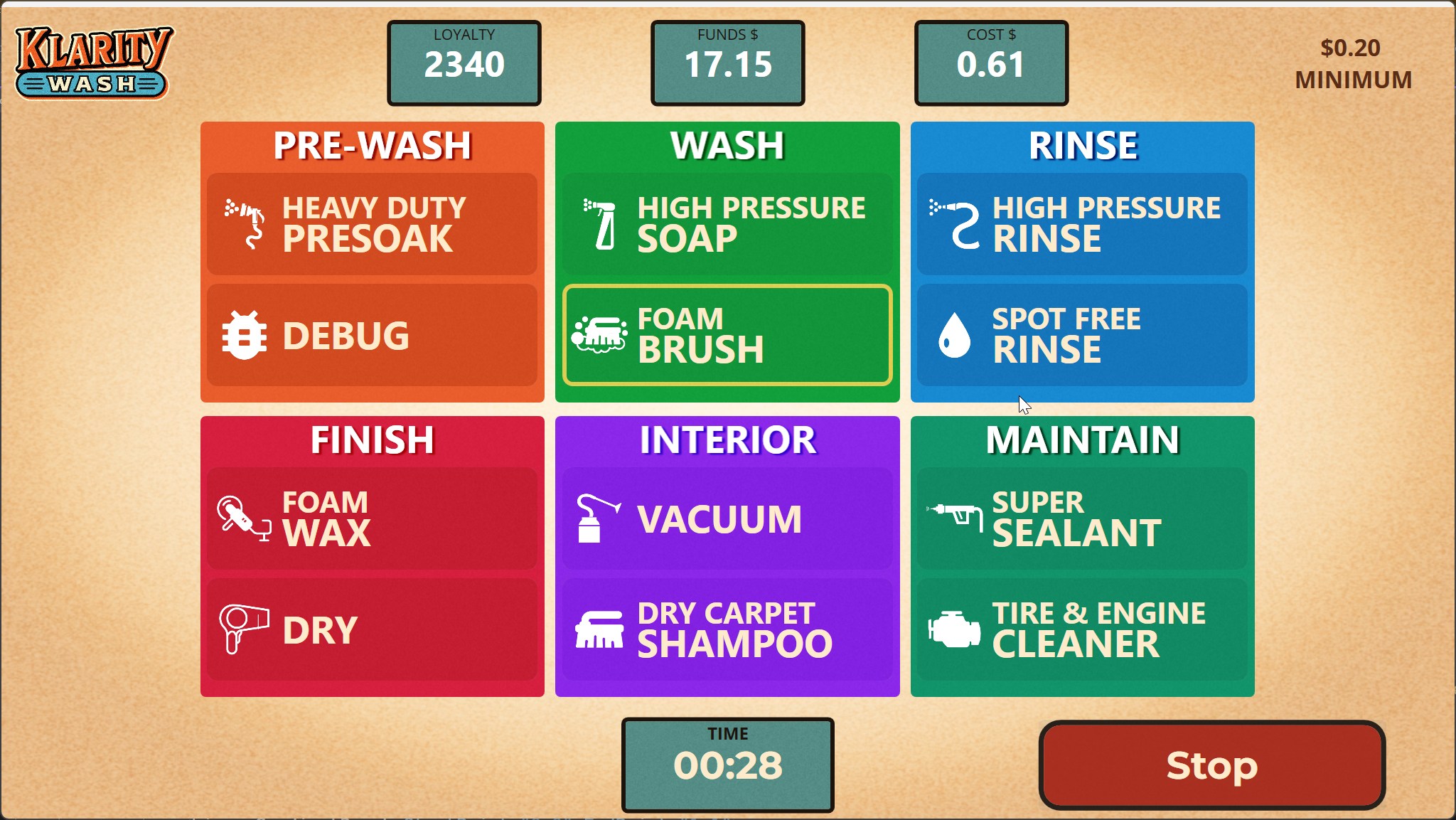
Codebytes designed and built a replacement platform around the way the car wash actually operated. Customer kiosks, staff POS terminals, payment systems, customer and business accounts, reporting, administration, and physical wash-bay controls became parts of one coordinated system.
Customers could pay, select and activate services, reload stored value, use RFID or barcode accounts, and interact with unattended kiosks. Staff gained dedicated tools for retail sales, fleet accounts, billing, promotions, reporting, and operational support.
Preserving Existing Equipment
A defining project decision was to treat the existing equipment as an asset, not an obstacle.
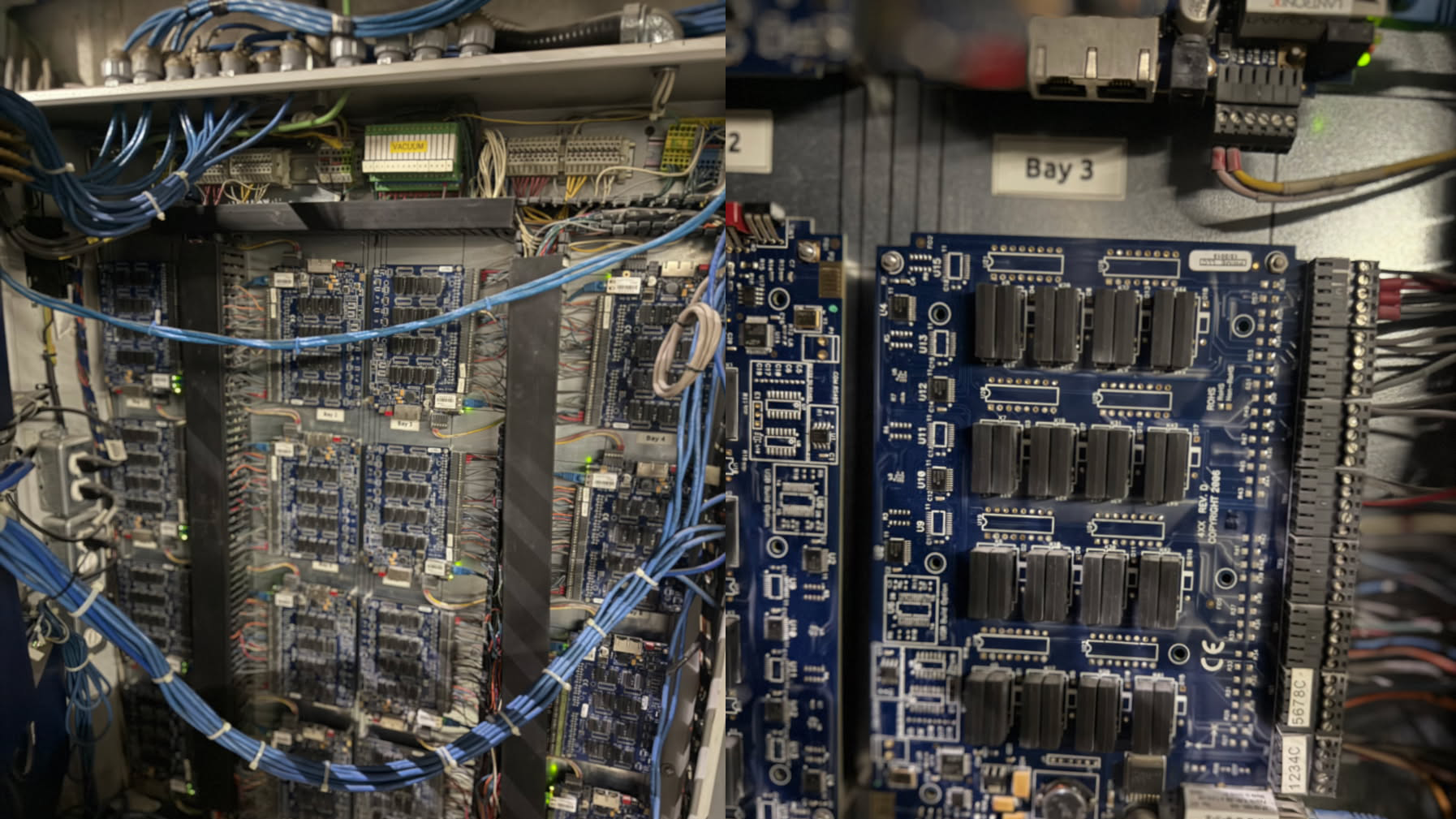
Codebytes integrated the new platform with the relay boards, wash-bay controls, payment terminals, RFID readers, barcode workflows, and front-office devices already installed on site. The software changed around the equipment instead of requiring the equipment to change around a replacement product.
That preserved the client's infrastructure investment while reducing cost, disruption, and operational risk. The same approach can be valuable anywhere specialized machinery or control hardware will outlive the software originally supplied with it.
One Integrated System, Working in Real Time
The hardest part was not building any single kiosk, payment flow, account feature, or equipment control. It was orchestrating all of them so that one action produced the correct result everywhere else in the business.
A customer could begin in the membership app, at an unattended kiosk, or with an employee at the POS. Whichever path they used, their identity, account balance, payment result, promotion eligibility, selected service, receipt, and wash-bay activation had to remain consistent in real time.
The payment environment had the same requirement. Stripe powered online account top-ups, while physical terminals handled on-site debit and credit transactions. Stored-value cards, digital gift cards, memberships, and business accounts followed their own rules, but every successful transaction still had to update the correct balance, receipt, reporting record, and service access.
Behind those customer interactions, the platform maintained business-account histories and automated B2B invoicing. Eligible account activity flowed into monthly invoices, scheduled delivery, payment tracking, receipt application, and auditable account records. Staff could investigate the complete history without reconciling disconnected systems by hand.
The same coordination supported growth after launch. Administrators could activate flash deals that appeared through the membership experience and were recognized at the POS. Digital gift cards created online could be used on site. New capabilities could join the existing platform because the underlying accounts, payments, promotions, reporting, and equipment controls already shared one operational foundation.
System Components
The platform brought together customer-facing software, payment and account services, business administration, and physical site control:
- Customer touchscreen kiosks and automated wash-service activation
- Staff POS software synchronized with front-office hardware
- Physical payment-terminal integration for debit and credit
- Stripe-powered online account top-ups
- RFID, barcode, membership, stored-value, and gift-card recognition
- Digital gift-card creation and on-site redemption
- Membership-app backend integration and promotion notifications
- Administrator-controlled flash deals recognized across customer and staff surfaces
- Business and fleet payment accounts with automated monthly invoicing
- Invoice delivery, payment tracking, receipt application, and account auditing
- Relay-board and wash-bay control integration
- Cloud backend, web administration, reporting, and transaction review
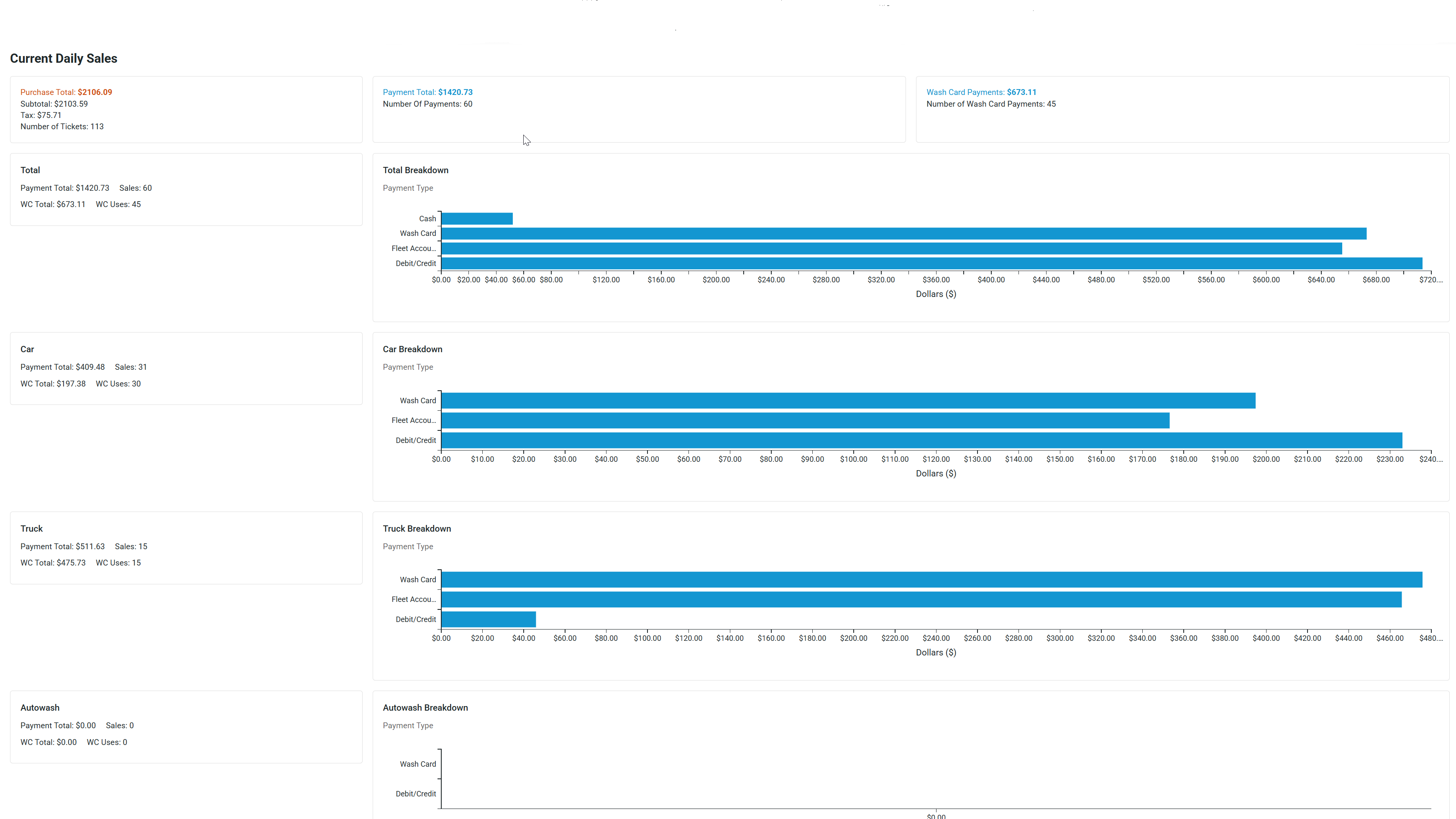
What Codebytes Handled
Codebytes owned the software replacement from system analysis through live operation:
- Legacy-system analysis and replacement planning
- Operational workflow and system architecture
- Windows kiosk and staff POS applications
- Cloud backend, APIs, data model, and administrative portal
- Payment, identity, account, and equipment integrations
- Security, auditing, reporting, and operational support tools
- Deployment coordination and live rollout support
- Post-launch enhancements across the shared platform
Business Results
Klarity Car Wash gained a supported software foundation without replacing the physical infrastructure that still worked. By September 2026, the replacement had been operating the car wash for approximately a year.
The project:
- Replaced the unsupported POS and wash-control platform
- Preserved existing wash equipment, controls, and payment infrastructure
- Avoided turning a software replacement into a full site rebuild
- Connected unattended customer service with staff-assisted operations
- Created a shared operational record across payments, accounts, invoices, receipts, and reporting
- Allowed the business to transition without an operational shutdown
- Provided a foundation for later invoicing, promotion, gift-card, membership, and payment enhancements
Technical Notes
The platform combined Windows touchscreen applications, a cloud backend, a web-based administrative system, physical and online payment integrations, barcode and RFID workflows, and direct relay-board communication using industrial control protocols.
Closing
This project reflects the work Codebytes is built for: software that coordinates real operations rather than solving one isolated screen at a time. The finished platform connected customer experiences, payments, accounts, staff workflows, administration, reporting, and physical equipment into one working system.
For businesses with valuable equipment, specialized workflows, or unsupported legacy software, the right replacement can preserve what already works while creating room for the operation to evolve.